
Engineering education is undergoing significant improvements, and if you’re a student of the Unitedworld Institute of Technology (UIT), you’re at the forefront of this transformation. The days of merely drawing out formulas and sketches on paper are rapidly disappearing.
With technology exploding and companies needing more than ever before, it’s clear that the next generation of education in engineering will be about staying up to date with what’s next. From teaching methods that are innovative to the skills that will get you a job, the landscape is changing fast. Let’s take a look at the trends in engineering education that are influencing your education and what they mean for you, and where it’s heading.
Hands-On Learning Taking Over
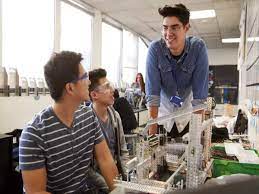
The days of engineering were a matter of lecturers as well as dusty books. Modern teaching techniques for engineering are changing the rules, placing you in control. Imagine labs where you construct drones or modify circuits, instead of only talking about them. UIT’s likely already got you playing around with real equipment, and that’s what the future will be–learning through doing.
What’s the reason this is a win? Businesses only want knowledge of books anymore. They need graduates who have built a robot or coded an entire system before the first day. It’s a great way to build confidence. Not just memorizing; you’re solving real-world problems. This trend is growing rapidly as more and more colleges are creating maker spaces as well as labs for projects. What’s your edge as you’re a UIT student? You’re already aware of it.
Tech Tools Changing the Classroom
Imagine a class where VR glasses let you take a walk through a bridge model or AI tutors assist you in debugging code. It’s not a sci-fi story, but an engineering school’s future, coming to you. Online platforms, simulations, and intelligent software are making learning more interactive. At UIT, there are instructors using digital twins — virtual models of machines–to demonstrate how everything can be done without sweating.
This change is going to be a game-changer for you. Simulations let you try out concepts without breaking the bank, and online tools mean that you can study at any time and from any time. Yes, it’s odd to switch out the chalkboard for screens, but this prepares for the jobs where technology is supreme. What’s the prediction? When you’re done, these tools won’t be a luxury, but they’ll be standard.
Skills Over Degrees
In the past, when engineering degrees were your ticket to the top. Today, it’s all about what you can use it for. Engineering education predicts that employers will pay more attention to the skills you have–designing, programming, collaboration, and teamwork — rather than your marks. UIT is likely to encourage students to learn more, such as Python or CAD, along with their main disciplines, and this is right on.
This is your opportunity to shine. An impressive project — like the solar car you designed–can surpass a perfect GPA on your resume. Companies are looking for problem-solvers who can solve problems and not just talk about the theory. Start building your portfolio, now, nd you’ll be ready when the recruiters knock.
Going Global through Your Learning
Engineering is no longer confined to a single location. Your bridge design might be in Dubai, or the app you’ve created could be in Tokyo. Modern teaching techniques for engineering are taking note of this international perspective and mixing global nuances with local influences. Consider international case studies as well as virtual collabs between students across the globe. UIT could even connect you to exchange programs or international competitions.
What’s so cool about this? It gives you a glimpse of the ways engineering operates outside of India: different requirements, standards, and climates. It’s an uphill task to change the changing world, but it’s also an opportunity to think outside the box. Engineering education’s future is apprehensive, and becoming comfortable with it now prepares you to be able to work anywhere.
Sustainability is baked into everything.
The world is screaming for assistance. Engineers are the solution. Sustainability is creeping into every nook and cranny of the engineering education industry, be it solar panels for electrical classes or eco-friendly designs in civil construction projects. UIT’s probably had you eyeing greener options, and this is the way to go.
This isn’t just about tree-hugging; it’s your professional boost. Employers want graduates who can create products that last and don’t harm the environment. Learn this, and you’ll be the person who designs intelligent cities or clean energy equipment. The future is certain: Green skills will be essential, not a nice thing to have, at the point you’re in the field.
AI and Coding Crashing the Party
Artificial intelligence isn’t just a thing for computer geeks; it’s also affecting all fields of engineering. Future engineering training is that you’ll likely be involved in AI and machine learning, or at the very least, programming, no matter what the field you’re in. UIT is pushing this, don’t you think? You may already be experimenting in the lab with smart algorithms.
Let’s face it: Machines are taking over mundane tasks, and engineers have to manage their actions. The process of learning code or AI fundamentals means that you can create a smarter bridge, or even automate the production line of a factory. It’s not easy for those who aren’t an IT geek; however, it’s the key to standing out. In the near future, skipping this information isn’t an option anymore.
Teamwork Making a Comeback
Engineering isn’t an individual job nowadays. Modern teaching techniques for engineering include group projects – think of creating a wind turbine with your friends. UIT is likely to put you in groups already, which is ideal preparation for the world of work.
What’s the reason this is so hot? Companies are looking for graduates who can think on their feet, debate, and collaborate. Solo geniuses are great; however, teams can get things accomplished. Additionally, having fun bouncing ideas beats working alone. It’s a trend that’s not going away. Expect more collab challenges, and use these to develop your people’s abilities.
Online Learning Stretching Limits
Lockdowns proved that the online courses aren’t for backups; they’re powerful. Engineering education predictions predict that hybrid classrooms will be around for the long haul. Imagine live-streamed lectures, online labs, or late-night studying sessions in your dorm. UIT is likely to mix this input to give you the flexibility.
This is great for you. Have you missed the class? Go back and watch it. Are you stuck on a particular idea? Try an online simulation. There are glitches in technology that can be a pain, but there’s the freedom to find how to navigate. The future will blend digital and physical, so making yourself comfortable online is a wise choice.
Industry Ties Getting Tighter
Colleges like UIT aren’t just islands anymore. They’re hooking up with major corporations. Think guest talks, internships from experts, or projects that are straight from the firm’s game plan. The trends in engineering education are gaining traction from the real-world connections.
What’s the benefit for you? Experimentation– meet engineers, learn about the work they do, and perhaps get the job before your graduation. This is a chance to experience working in the field before getting the job, making it easier to make a decision. The expectation? The ties will get stronger, and students such as you who get involved early will get going.
Lifelong Learning as the New Norm
Your diploma will not be the end of the road; it’s only the beginning. Future engineering training suggests you’ll continue to learn for the rest of your life. The technology industry is changing fast. Today’s top technique could be obsolete within five years. UIT is preparing for that, pushing the limits of adaptability over memorization.
It’s your job to be a leader. Be curious, and take a class on robotics, or try the latest technology post-graduation. Jobs will go to the learners and not the ones who sit. It’s a race, not a sprint, and establishing that mindset today helps you stay ahead.
Conclusion
Engineering education’s future is a mashup of trends in engineering education, including hands-on labs and smart technology, green goals, and more. All of this is available at UIT. Modern teaching techniques for engineering make you a doer rather than a dreamer, and the predictions for engineering education point to the future where knowledge is the king. There’s a lot to absorb and learn, but you have the chance to create a career for the next day. Get started with these trends today, and you’ll soon be the person everyone is chasing.